

Turn every reported vulnerability into an opportunity to strengthen your security
A VDP is your official channel for anyone to report flaws to you in a safe, structured way. We manage it for you: you only receive what matters, already validated.
Why a VDP?
Every system has vulnerabilities, and sometimes it is someone on the outside, acting in good faith, who finds them. Imagine a researcher finds one in your systems and wants to let you know.
What happens then?
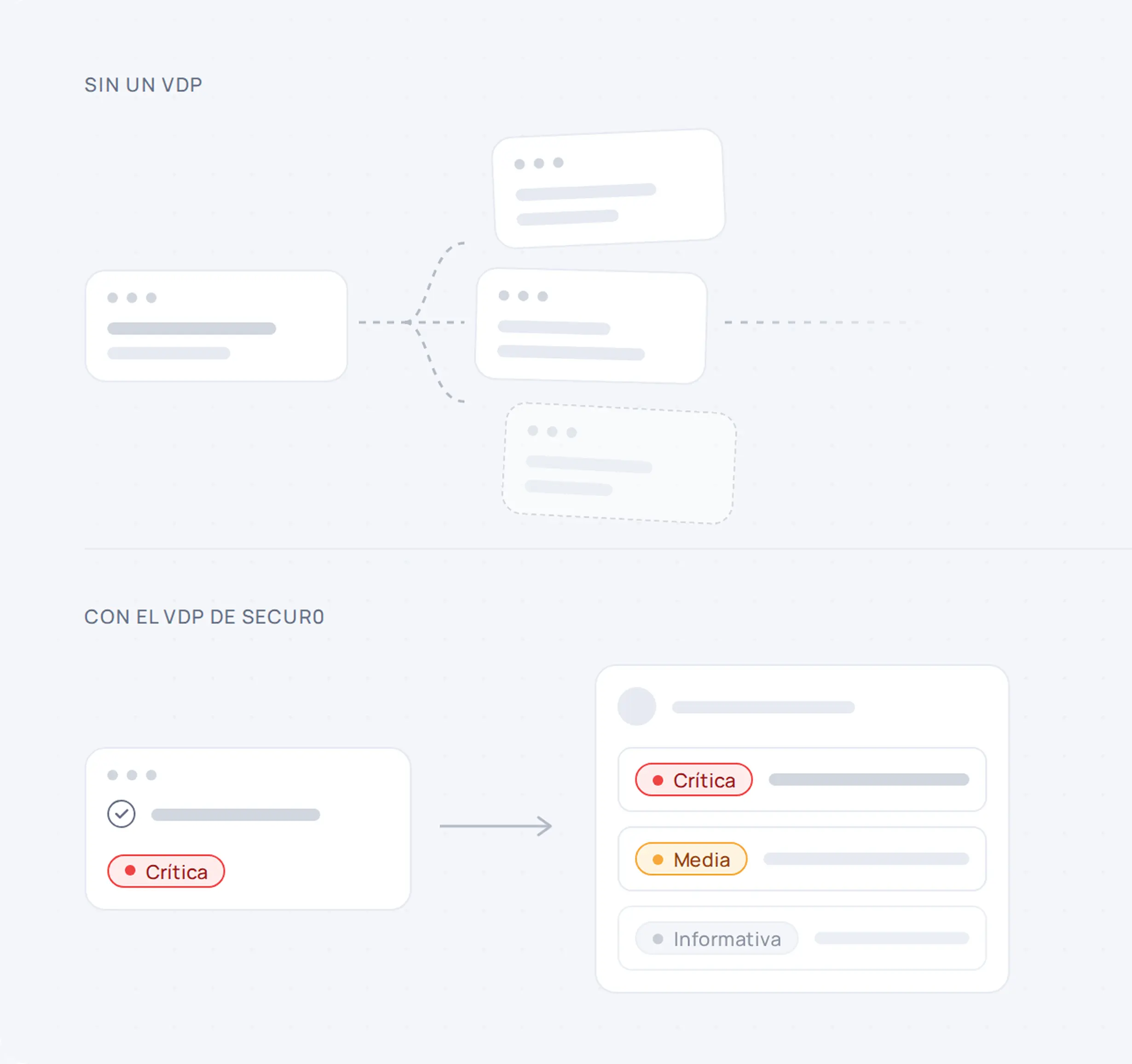
This is what usually happens without a VDP
How do they find you?
Without clear guidelines, tracking down your security team's contact details is not easy. The researcher wants to help, but has no idea where to start.
So they write wherever they can.
More often than not it lands in customer support or a generic inbox. From there, the message usually fails to reach the right people, or sits for weeks in an inbox. And email is not a safe channel for something as sensitive as a vulnerability either.
And if they get no reply…
Given enough time, they may decide to go public on their own, on social media or on their blog. That is what is known as full disclosure: the vulnerability becomes public before you have been able to fix it.
With a VDP, this story goes very differently
You give whoever wants to help you a single place, clear and secure, to report it. You get the warning in time, in an orderly way, and with the legal backing to handle it calmly.
So, what is a VDP?
A Vulnerability Disclosure Program (VDP) is the formal process through which external researchers can report security flaws to you responsibly and without fear of legal retaliation.
It is a practice recommended by ENISA, CISA and NIST, among others, and increasingly a regulatory requirement.
Secur0 is a benchmark in vulnerability management and disclosure.
We do not just receive your reports: we handle them with the rigour of those who define the standard.
We are a CVE Numbering Authority (CNA) and we work in line with the ISO/IEC 29147 and 30111 standards, the ones that govern how vulnerabilities are received and handled worldwide.


This is how your VDP works, step by step
You publish your policy
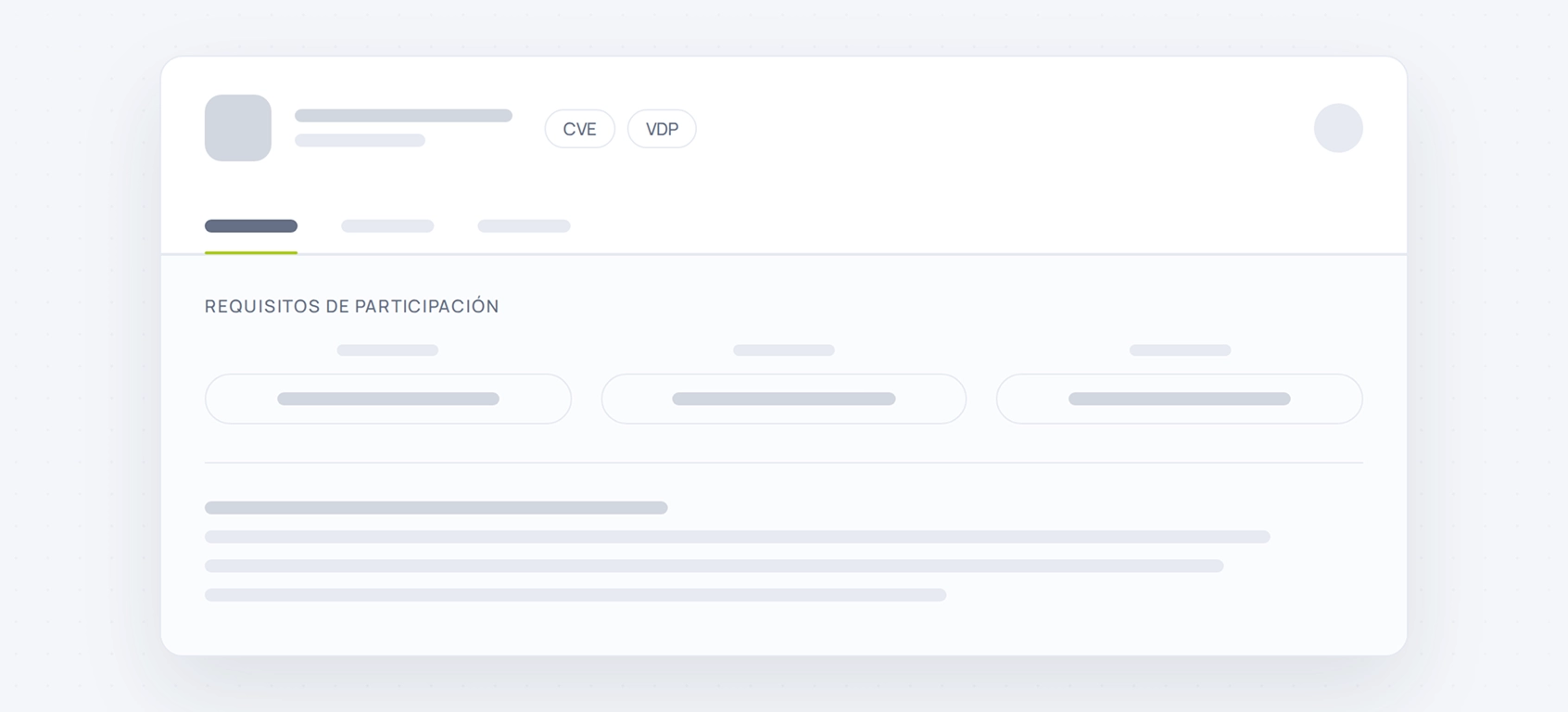
We help you draft your disclosure policy and your security.txt file. Within minutes you have an official, visible channel where people can report to you.
Researchers report through your channel
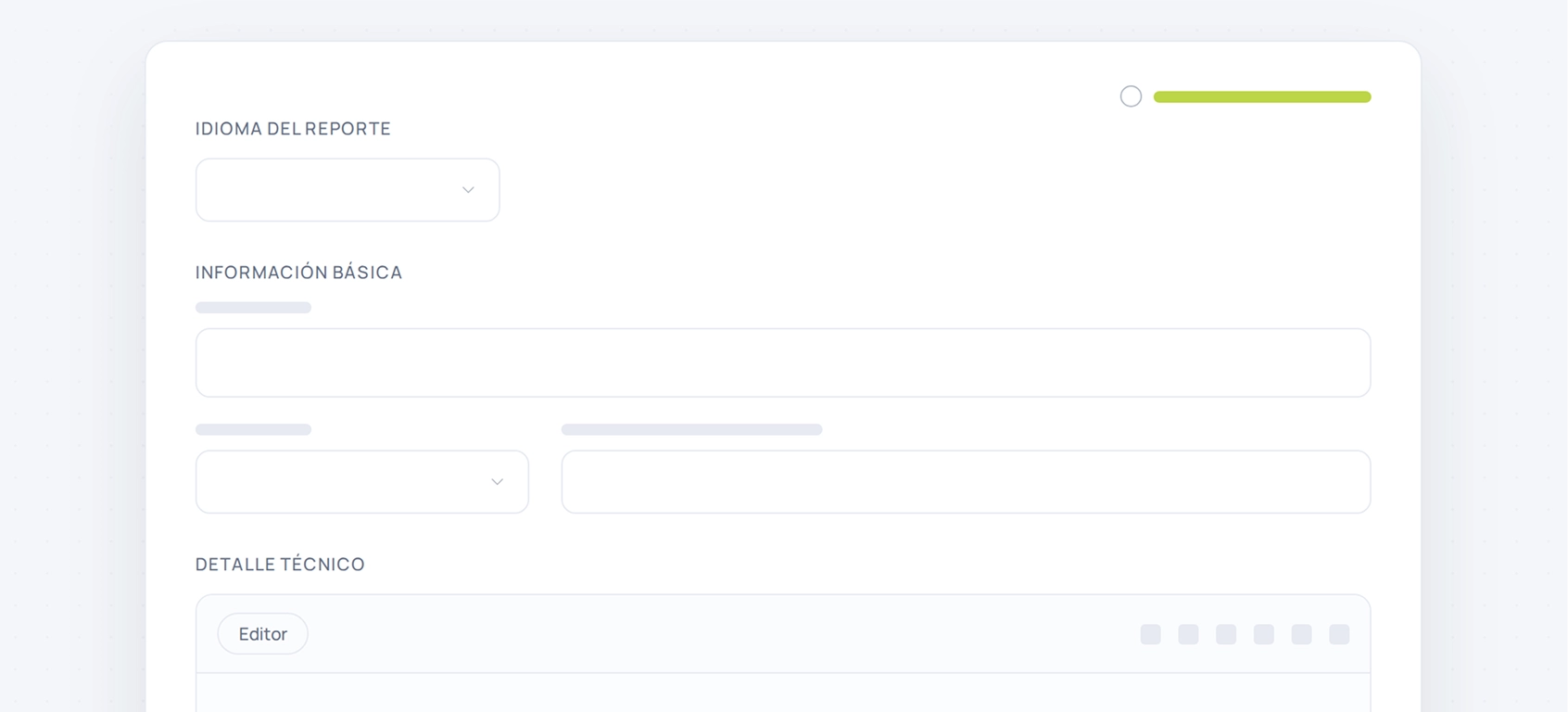
Any researcher who finds a flaw logs it in your program, with the rules and the legal framework clear from the very first moment.
We validate, triage and prioritise for you
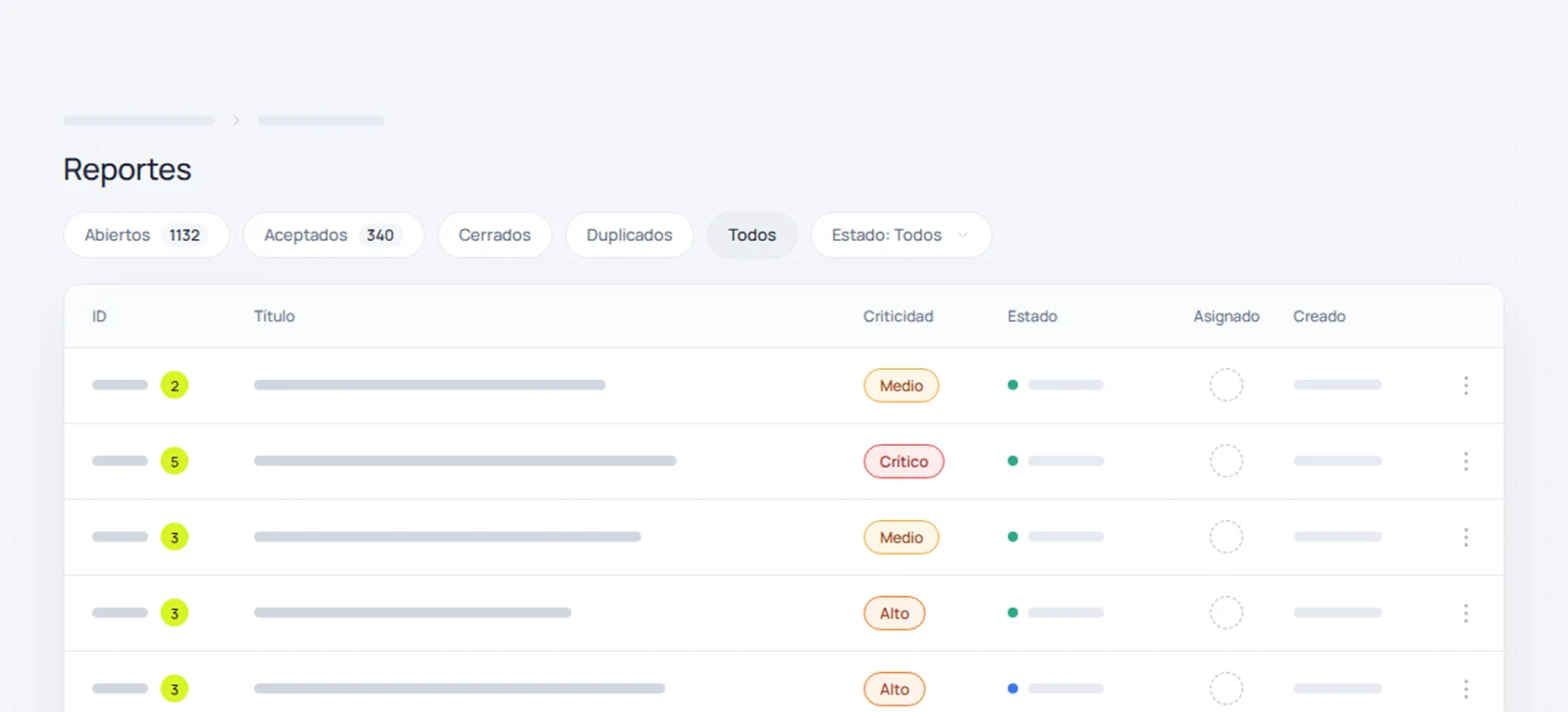
We review every report, discard the noise and the duplicates, and validate what is real. Every valid vulnerability reaches you prioritised by severity.
You analyse and prove it
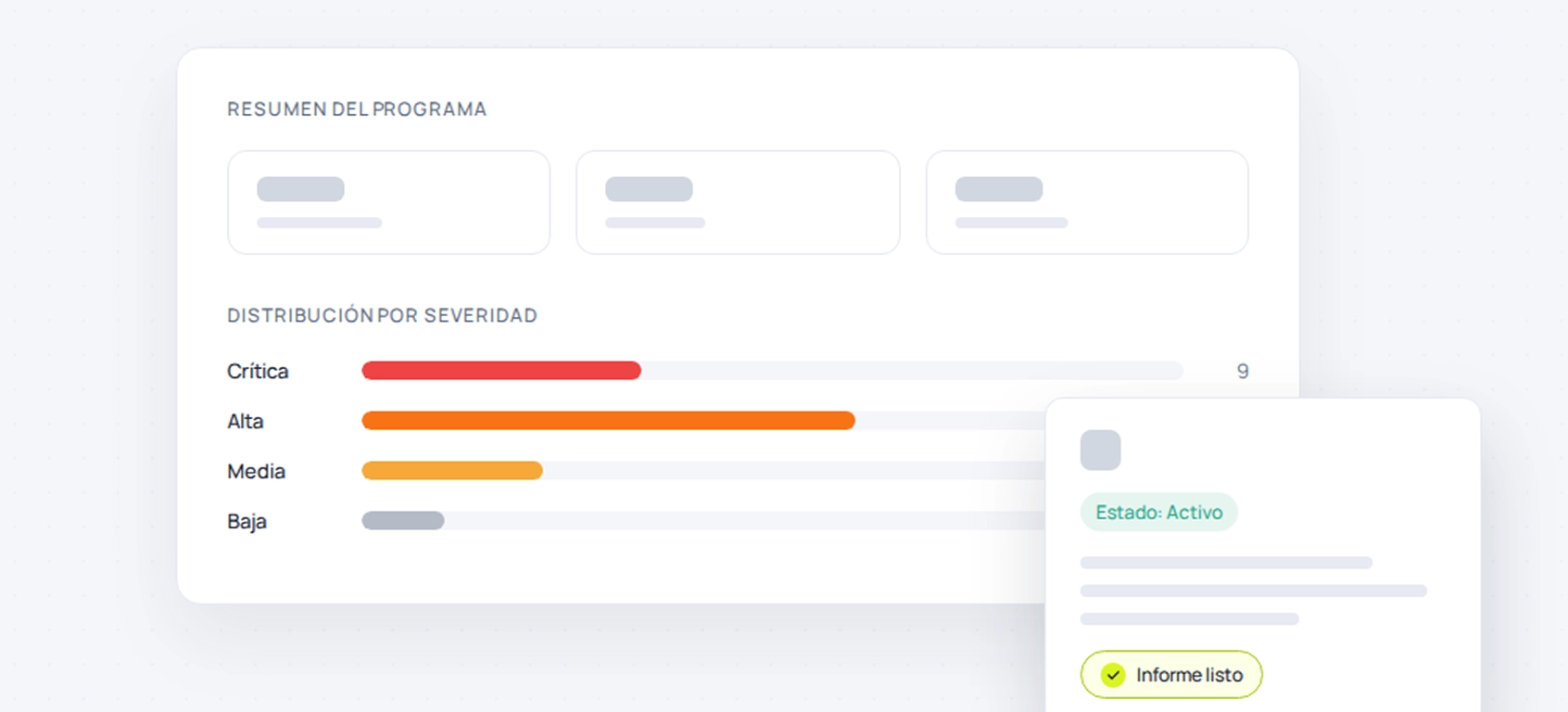
You follow everything from a single dashboard and generate evidence reports whenever you need them, for audits or for the board.
Need a hand?
Tell us about your case and we'll help you.